Drying herbs: how to do it at home
Cooking enthusiasts know it well: herbs should never be missing when preparing flavorful dishes or experimenting with different tastes. Fresh herbs are easily available in the summer when growth is most lush, while dried herbs can be bought all year round. However, those who have a small home garden and want to harvest and preserve them for use in the winter months should learn how to properly dry herbs. For centuries, natural methods have existed using the action of the sun and air, while today we use specific food dehydrators that absorb humidity through hot air produced inside the machine. Let's discover how to stock up on these precious kitchen allies and how to store them correctly.
How to harvest herbs
Having an herb garden at home is a small pleasure that is truly indispensable for many. After all, the possibilities are diverse: whether set up indoors, in the garden, or on a balcony, it is an absolutely affordable "green" choice. However, not even the best green thumb can do anything against the cold season, when some plants disappear and others go into vegetative rest, preventing us from using fresh spices and herbs every month. In addition, there are certain types of spices that are best consumed only after being dried. Precisely for this reason, the idea of drying herbs and stocking up for the whole year should not be overlooked.
Before moving on to the actual drying, however, it is important to determine how to harvest the herbs we are interested in. The best time to proceed is just before flowering, a moment in the growth cycle when the concentration of active compounds is higher. The most favorable time of day for harvesting is in the morning, but only after the sun has evaporated the morning dew, so as to maintain a higher content of essential oils in the plants, which will therefore have a more intense scent after being dried. Finally, damaged leaves or those ruined by insects must be discarded, and the herbs should be collected without rubbing or touching them too much, and without thinning the plant out too heavily.
How to dry herbs at home
Dehydrating food is an excellent technique for keeping nutritional and organoleptic properties unchanged, very useful especially when there is less abundance of fresh products but we still want to bring them to the table out of season. The practice is particularly suitable for herbs, which can be dried using different methods. Whatever method is chosen, the leaves suitable for harvesting must be preventively cleaned with a small brush to remove dirt and soil residues, washed gently with a sponge and cold water, and dried with care using paper towels.
Returning to drying methods, the traditional one does not require any equipment. We must gather the herbs in small bundles, more or less of the same size, and arrange the bunches upside down, even better if in a paper bag to speed up the process. The herbs can also be placed on a fine mesh net or a grate, so that there is air passage on both sides. In any case, it is appropriate to keep them away from humidity and direct sun, removing them when they are crumbly and dry - but they must not crumble into dust! This method, however natural, is subject to long and variable times, which depend on weather conditions.
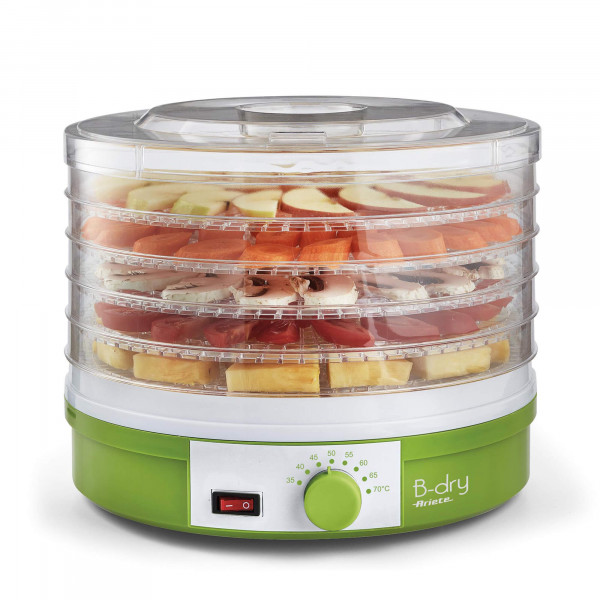
To facilitate and accelerate the drying times of herbs, we can therefore resort to the electric oven and the microwave, the first to be set at a maximum temperature of 35 degrees Celsius, the second at maximum power. These are two faster approaches, but they risk partially dispersing the organoleptic properties and aromas of the herbs themselves. Precisely for this reason, the dehydrator is undoubtedly the best method for dehydrating herbs. This small appliance, like the B-dry by Ariete, ensures the evaporation of water and, at the same time, the maintenance of minerals and vitamins in the spices. In this way, we can preserve them long-term without adding additives and preservatives, combining healthy cooking with tasty and flavorful results. The BPA-free transparent trays allow you to monitor the progress of the drying at any time, which takes place with uniform heat distribution and an adjustable temperature from 35 to 70 degrees.
How to store dried herbs
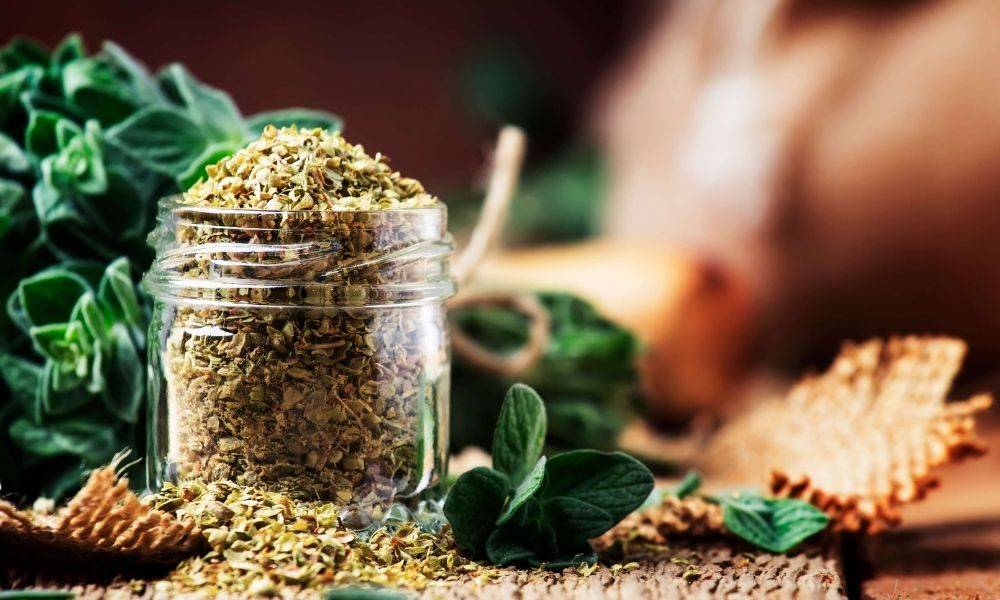
After drying the herbs, it is time to store them for use whenever we need them. Doing so is very simple: just dry the freshly harvested herb and then place it in glass jars with screw caps or in airtight bags, to be kept in the pantry. Damp places and exposure to too much light should be avoided.



Related Products:

Microwave oven 951